Across the UK’s Big Six office markets – Leeds, Manchester, Birmingham, Edinburgh, Glasgow, and Bristol – city centre leasing activity has proven more resilient than out-of-town locations. Over the past year, leasing in city centres has reached 78% of pre-pandemic averages, compared to just 51% in out-of-town markets.
This divergence reflects shifting occupier priorities, with many businesses seeking central locations that offer better connectivity, refurbished spaces, and opportunities to collaborate within thriving business ecosystems.
Leeds Office Market: Strength in Refurbished Space
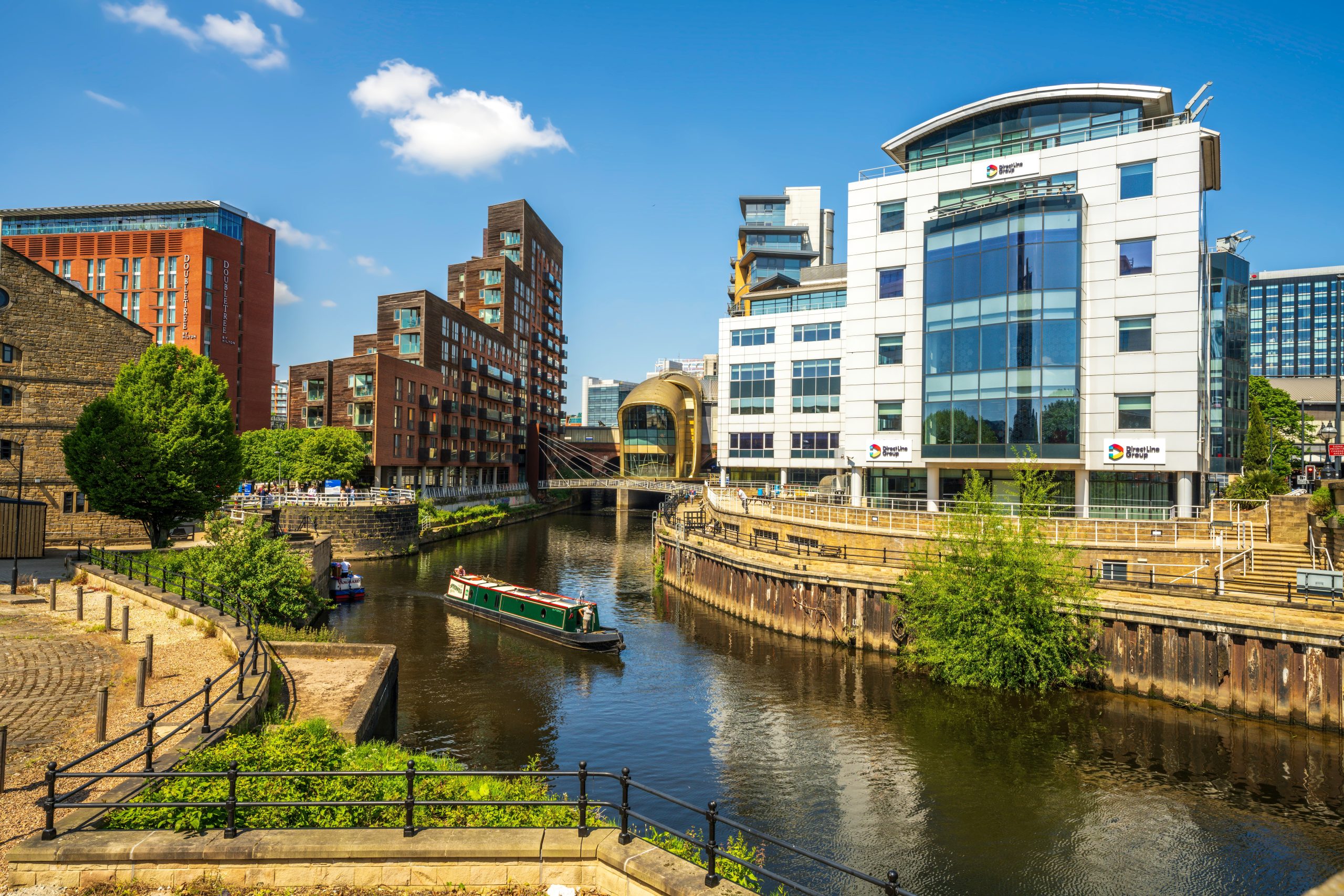
In Leeds, where new-build supply in the city core remains limited, demand has concentrated on refurbished Grade A stock. Notable transactions include mid-sized commitments at Bridgewater Place and Bruntwood’s West Village, alongside new space leased at Aire Park, south of Leeds station.
This activity underlines both the resilience of the Leeds office market and the ongoing appetite for high-quality refurbished buildings. It also reflects a broader national trend, where occupiers are prioritising sustainable, well-located, and amenity-rich workplaces.
Market Drivers Across the Big Six
- Leeds: The city continues to attract professional and financial occupiers, with Channel 4, Arup, and AtkinsRéalis among those reinforcing the city centre’s status as a northern business hub. Strong demand for refurbished Grade A stock, including lettings at West Village and Bridgewater Place, highlights occupier preference for well-located, sustainable offices near Leeds Station and key transport links.
- Edinburgh: Lloyds Bank made a landmark 270,000 sq. ft pre-let at its Port Hamilton base, supported by multiple lettings at Waverley Gate and 6 St Andrews Square.
- Manchester: BNY Mellon (200,000 sq. ft) and Autotrader (136,000 sq. ft) both committed to prime new builds at Angel Square and Circle Square.
- Birmingham: Strong demand from professional services, with EY and KPMG securing prime city centre space.
- Glasgow: SSE completed the city’s largest core lease in over five years with 62,000 sq. ft at Aurora, joined by Pinsent Masons’ 31,000 sq. ft letting.
- Bristol: City centre activity lagged, but EDF Energy made a major out-of-town commitment of 78,000 sq. ft at 1000 Aztec West.
These examples highlight the clear trend towards high-quality city centre office space, particularly where new or comprehensively refurbished stock is available.
Expert Insight: The Balance Between City Centre and Out-of-Town
Bradley Hall’s Henry Bowers- Agency Surveyor in the firm’s Leeds office- offered perspective on the implications of this trend:
“It can certainly be seen as positive when city centre office leasing outweighs out-of-town leasing, particularly from the perspective of urban vitality and economic development. Strong demand for central offices often reflects a thriving business ecosystem, where occupiers value proximity to clients, professional networks, transport hubs, and amenities. This concentration of activity can support regeneration, boost retail and leisure sectors, and make city centres more attractive places to live and work. It also tends to align with sustainability goals, as city centre offices are usually better served by public transport, reducing reliance on car commuting.
“That said, there are also risks and drawbacks. High demand for city centre space can push rents and business rates to levels that exclude some occupiers, particularly SMEs. Congestion, overcrowding, and pressure on infrastructure may also follow. Meanwhile, if out-of-town offices see a sharp decline in demand, those areas can suffer from underinvestment, job losses, and stranded assets. Some businesses value the flexibility, lower costs, and accessibility (especially parking and road connections) that out-of-town locations provide, and an imbalance towards city centres may reduce this choice.
“Overall, while stronger city centre leasing signals confidence in the urban market, a balanced supply of both city centre and out-of-town space is generally healthiest. Each serves different occupier needs, and over-reliance on one type of office location can leave the market less resilient to shifts such as hybrid working, changing commuting patterns, or sector-specific requirements.”
Leeds: A Market with Momentum
For Leeds occupiers and investors, the takeaway is clear: demand for city centre space remains strong, but limited supply of new buildings means refurbishments will play an increasingly important role.
As employers seek spaces that support collaboration, sustainability, and accessibility, Leeds city centre is well positioned to benefit from this ongoing shift. However, maintaining balance with out-of-town options will be important to ensure a resilient and inclusive office market.
Contact Henry Bowers for Commercial Agency support in Leeds on 0113 223 4868 or email henry.bowers@bradleyhall.co.uk